


Which Juicers Handle Batch Juicing Best
April 14, 2026
Batch juicing sounds efficient, and it is, until your juicer starts struggling halfway through.
More ingredients mean more pressure on the motor, more heat, and a greater need for consistency from start to finish.
That’s why choosing the right juicer matters more when you batch.
This guide breaks down what to look for and which models handle volume best. Keep reading to choose the right one for you.
Pro Tip: Batch juicing becomes easier when your machine supports steady, uninterrupted use. Hurom’s cold-press juicers are built for consistent extraction and simple cleanup, which makes handling larger batches feel much more manageable.

What Does Batch Juicing Demand from a Juicer?
As I explained above, batch juicing changes the way a juicer is used from the very beginning.
What feels smooth in a quick session can behave very differently once you start preparing several servings at once.
Understanding these changes helps explain why some machines stay consistent while others start to struggle.
What Changes When You Juice in Batches
Making juice in advance is not as straightforward for your juicer as it is for you. That’s because it directly affects how the machine performs during each session and, more importantly, over a longer run.
As volume increases, several factors come into play:
-
Longer run times.
-
Continuous ingredient feeding.
-
Increased internal strain on components.
-
Gradual heat buildup.
-
Need for consistent results across batches.
These factors don’t always cause immediate issues, but the impact builds as the session continues.
A juicer may start strong, then lose consistency as heat and pressure increase. Results can vary from one batch to another.
That matters even more if you plan to store your juice.
Fresh juice already has a limited shelf life. For example, nutrients like vitamin C begin to degrade over time, even under refrigeration.
In fact, a study on storage stability found that the ascorbic acid (vitamin C) in cold-pressed orange juice stored at 4°C decreased significantly (p < 0.05), declining by 32.59% after 12 days.
Starting with consistent extraction helps maintain better quality across batches. Conversely, inconsistent extraction negatively affects your nutritional intake.
Why Not All Juicers Can Handle It
Many models rely on smaller motors, plastic drive components, and basic cooling systems, which handle short sessions well but wear down, overheat, or lose efficiency during longer, high-volume runs.
When a machine is pushed beyond what it’s designed for, common issues begin to appear:
What Happens When a Juicer Can’t Handle Volume?
Using a juicer that isn’t built for batch juicing quickly affects both performance and workflow.
At first, the differences may seem small. But as sessions get longer, the limitations become harder to ignore.
Here are the most common issues:
-
Motor overheating or automatic shutdown: The machine stops mid-session and needs time to recover.
-
Inconsistent juice extraction: Results vary between batches, affecting texture and taste.
-
Wet pulp: Lower juice yield means more wasted produce.
-
Slower processing over time: Performance drops as heat builds up.
-
Increased oxidation: Less efficient extraction affects how well the juice holds during storage.
-
Frequent interruptions: You need to stop, reset, or adjust constantly.
These issues change how practical batch juicing feels. What should take less time starts taking longer. The process becomes less predictable, and maintaining the habit gets harder.
Over time, using the wrong juicer can also lead to faster wear and higher replacement costs.
Pro Tip: If you want to improve your batch juicing workflow, these 8 awesome planning tips can make longer juicing sessions much easier to manage.
What Features Matter Most for High-Volume Juicing?
Batch juicing shifts the focus from speed to consistency.
A juicer that works well at volume needs to maintain performance from start to finish without interruptions, overheating, or drops in efficiency.
Some features define reliability:
Motor Performance and Thermal Stability
The motor plays a central role in how a juicer handles longer sessions.
It needs to remain stable under pressure and maintain the same level of performance throughout the process.
You can usually tell this by checking motor wattage, RPM consistency, and whether the brand specifies continuous run time or includes overheating protection.
A strong motor helps you to:
-
Handle extended sessions without overheating.
-
Maintain torque with dense ingredients like carrots or beets.
-
Prevent unexpected shutdowns during long runs.
-
Reduce long-term wear with repeated use.
Some machines lose efficiency as internal heat builds up. Others maintain steady performance throughout the entire session.
That difference becomes clear when you start working with larger batches regularly.
Feeding System and Workflow Efficiency
Workflow is closely tied to batch juicing.
If preparation takes too long or requires constant attention, the process becomes harder to maintain over time.
Look at chute size (measured in inches/cm), whether whole fruits fit without cutting, and if the machine supports auto-feeding or hopper-style loading.
A well-designed feeding system helps you:
-
Reduce prep time with larger feed chutes.
-
Process bigger pieces of produce.
-
Keep ingredients moving without constant interruptions.
Self-feeding systems simplify things further. You can load ingredients and allow the machine to process them at a steady pace.
This improves efficiency and makes batch juicing feel more manageable.
Juice Yield and Extraction Consistency
Efficiency becomes more important as volume increases.
Small losses in each batch add up quickly, especially when you’re using large amounts of produce.
You can judge this by pulp dryness, juice clarity, and whether reviews mention consistent results across different ingredients.
A high-performing juicer should:
-
Extract more juice from each ingredient.
-
Produce drier pulp as a sign of efficiency.
-
Maintain consistent output across batches.
Consistency is vital here.
If results vary from one batch to the next, the final quality becomes harder to control. And since juice already shifts during storage, starting with a more stable extraction helps everything hold up better over time.
Usability Under Volume (Cleanup and Stability)
Frequent repetition of the process makes ease of use more apparent.
Cleanup, in particular, can either support your routine or make it harder to maintain.
Check how many parts need cleaning, whether components are dishwasher-safe, and how quickly they rinse without pulp getting stuck.
A simpler design allows you to:
-
Rinse components quickly after use.
-
Reduce friction in daily use.
-
Keep the process sustainable over time.
Stability also plays a role during longer sessions.
You can spot this through weight, anti-slip feet, and user feedback on vibration or noise during operation.
A well-built juicer should:
-
Remain steady during extended use.
-
Minimize vibration.
-
Show durability under continuous operation.
These details may seem minor at first, but they shape the overall experience when you’re juicing in batches regularly.
Which Juicers Handle Volume Best?
Once you start batch juicing regularly, the type of machine you use becomes very noticeable.
Some juicers can handle a few servings without issues. But not every model is built for batch juicing.
Here’s a quick comparison of the most relevant options:
| Juicer | Best for | Volume level |
|---|---|---|
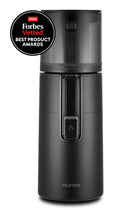
| Hurom CP50 | Commercial use, daily production | Very high |
| Hurom H400 | Hands-off batch juicing | Medium to high |
| Hurom H320 Cold-Press Juicer | Capacity and versatility | Medium to high |
| Kuvings AUTO10S | Hopper-based convenience | Medium |
This gives you a general overview. Now let’s break down how each model performs in real use:
Cold-Press Juicers – The Most Reliable for Batch Juicing
Cold-press machines are generally the most stable option for batch juicing.
They use a slow motor and masticating action to extract juice with steady pressure. This allows them to handle longer juicing sessions without overheating or losing consistency.
The most important benefits are:
-
More stable performance during extended use.
-
Higher and more consistent juice yield.
-
Lower heat buildup compared to centrifugal juicers.
-
Better suited for storing nutrient-packed juices.
This category includes recommended models like the following:
1. Hurom CP50 (Commercial) – Best for Maximum Volume
For very high-volume needs, a commercial juicer makes a clear difference.
The Hurom CP50 is designed to handle continuous use without losing performance. It’s built for situations where batch juicing is part of a daily routine or a business.
Key advantages:
-
Designed for continuous, heavy-duty use, and very high-volume needs.
-
Ideal for daily batch juicing or small business use.
-
A strong motor that operates at an optimal 65rpm maintains stable performance for 24 hours.
-
Extra-large 3-liter capacity.
-
Four pre-set, preprogrammed time options and customizable settings.
-
Low-noise AC.
-
Quick rinse function.
This type of commercial juicer focuses on durability and consistency above convenience features.
2. Hurom H400 – Best for Hands-Off Batch Juicing
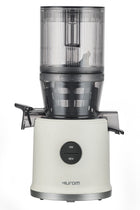
For home use, the Hurom H400 offers one of the most balanced experiences for batch juicing.
Its self-feeding hopper and simplified internal design make it easy to run longer juicing sessions without constant attention.
Principal advantages:
-
A self-feeding hopper reduces manual input.
-
Minimal prep required for fruits and vegetables.
-
Simplified design supports faster cleanup.
-
Consistent performance in longer sessions.
-
Rinse clean thanks to its Easy Clean patented technology.
-
Best suited for convenience and medium to high volume.
It’s a strong option if you want to streamline your routine without sacrificing performance.
3. Hurom H320 – Best for Capacity and Versatility
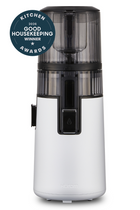
The Hurom H320 Cold-Press Juicer stands out for its capacity and flexibility.
It handles larger ingredient loads and works well with a wide range of produce, which makes it ideal for frequent batch juicing.
Main benefits:
-
Large hopper handles bigger ingredient loads.
-
Performs well with mixed produce like greens and root vegetables.
-
Stable across repeated batch cycles.
-
Produces ultra-low pulp juice.
-
This juicer is best suited for families or for frequent batch juicing.
It offers more control over the process while still maintaining consistent juice yield across batches.
4. Kuvings AUTO10S – Alternative Hopper-Style Option
The Kuvings AUTO10S focuses on convenience through automation.
Its large hopper and self-feeding design reduce prep time and allow a more hands-off workflow during juicing sessions.
Notable features:
-
Designed for automated feeding convenience.
-
Reduces prep similarly to other hopper systems.
-
Suitable for moderate batch juicing.
-
Less optimized for sustained heavy loads than more robust models.
-
Juice texture can feel more diluted with certain ingredients.
This machine is easy to use, but it may not be consistent during long sessions.
Centrifugal Juicers – Limited for Batch Use
Centrifugal juicers are fast and widely available.
They rely on high-speed spinning blades, which makes them convenient for quick use. But they tend to struggle with batch juicing.
Common limitations:
-
Faster heat buildup during longer sessions.
-
Lower consistency in juice yield.
-
More oxidation, which affects storage quality.
-
Need for constant feeding and attention.
They can be used occasionally, but they’re not designed for consistent bulk juicing.
Key Takeaways
Across all categories, a few patterns stand out:
-
Cold-press juicers handle volume more consistently than centrifugal juicers.
-
Hopper technology improves workflow but doesn’t always guarantee long-session stability.
-
Commercial juicers are the most reliable for continuous, high-volume use.
-
Models like the Hurom H400 and H320 offer a strong balance between performance, capacity, and usability for home batch juicing.
Choosing the right juicer depends on how often you batch juice and how much volume you process in each session.
Pro Tip: For a closer look, check this detailed comparison of Nama vs. Kuvings. It helps you see how performance, juice yield, and long-session stability differ in real use.
How to Optimize Your Setup for Batch Juicing

Even a decent juicer performs better with the right workflow.
Batch juicing depends on how you organize the process. A few simple adjustments can help you move faster, avoid interruptions, and keep results consistent across every session.
Here are practical ways to improve your setup:
-
Prep ingredients in advance: Wash and organize fruits and vegetables before you start to keep a steady flow.
-
Alternate soft and tough produce: Combine water-rich items with denser ingredients to reduce strain and improve extraction.
-
Avoid overloading the chute: Working in smaller amounts helps maintain stable performance.
-
Work in cycles: Short pauses between batches help the machine stay consistent during longer sessions.
-
Clean immediately after use: A quick rinse prevents buildup and keeps cleanup simple.
These changes make batch juicing easier to maintain and help your juicer perform more consistently over time.
Pro Tip: Using proper storage containers makes a difference. Hurom’s 18 oz juice jar set helps reduce oxidation with an airtight seal, keeps portions consistent, and makes it easier to store and grab your juice throughout the day.
Get Better Results from Batch Juicing with the Right Juicer
When you batch juice, you focus on consistency instead of speed.
The difference shows up in how your juicer handles longer sessions, how stable the extraction stays, and how reliable the results are across every batch. When those elements align, the process becomes smooth and easy to repeat.
Hurom juicers are designed with that in mind. Their slow squeeze technology supports steady extraction, better juice quality, and consistent performance over time, even during longer juicing sessions.
If batch juicing is part of your routine, choosing equipment that can handle that demand makes everything easier to maintain. Look through the Hurom catalog to find the model that works best for you.
FAQs
Which Juicer Is Best for Batch Juicing?
The best option is a cold-press juicer that maintains consistent performance during longer juicing sessions, like the CP50, which is better for very high volume.
What Features Matter Most for Batch Juicing?
Motor strength, thermal stability, and juice yield are key. A large hopper improves workflow, and easy cleanup helps maintain consistency across repeated juicing sessions.
Can You Use a Juicer Continuously for Large Batches?
Some juicers are designed for continuous use, but many are not. Cold-press juicers built for batch juicing can handle longer sessions without overheating or slowing down.
Are Cold-Press Juicers Better for High-Volume Use?
Yes, a cold-press juicer operates at lower speeds, which reduces heat and helps maintain stable performance. This also supports better juice quality when storing in airtight containers or glass bottles.
Which Hurom Juicer Is Best for Batch Juicing?
The H400 is ideal for hands-off use, the H320 offers more capacity and versatility, and the CP50 is best for very high-volume or daily batch juicing. For storage, using glass jars or vacuum sealing helps preserve freshness longer.