


¿Merece la pena una máquina de leche vegetal? Lo que hay que saber
junio 30, 2026
La leche vegetal comprada en la tienda es cómoda, pero ya no es la única opción.
Muchas personas ahora prefieren hacer la suya en casa, especialmente cuando quieren un producto más fresco y más control sobre lo que lleva.
Ese interés ha contribuido al auge de las máquinas para hacer leche de frutos secos. Aún así, un electrodoméstico específico no siempre es la respuesta correcta.
A continuación, desglosaré cómo funcionan estas máquinas, qué hacen bien, cómo se comparan con las licuadoras y los extractores de zumos lentos al hacer leches de frutos secos, y cómo decidir qué opción se adapta mejor a tu rutina.
Consejo profesional: Si estás comparando diferentes formas de hacer leche vegetal casera, es útil considerar qué más te gustaría preparar durante la semana. Los extractores lentos de zumos Hurom están diseñados para una amplia gama de recetas más allá de la leche de frutos secos.

¿Qué es una máquina para hacer leche de frutos secos?
Una máquina para hacer leche de frutos secos es un electrodoméstico especializado diseñado para convertir frutos secos, semillas, granos e ingredientes similares en leche vegetal casera.
La mayoría de los modelos automatizan gran parte del proceso, facilitando la preparación de lotes frescos sin depender de los cartones comprados en la tienda.
El objetivo de esto es simple: crear leche de frutos secos suave con menos esfuerzo.
Esa comodidad es una de las razones por las que estas máquinas se han vuelto más populares recientemente. A medida que más personas experimentan con estilos de vida sin lácteos, muchos buscan formas de hacer en casa leche de almendras fresca, leche de avena y otras bebidas vegetales.
Y la tendencia no hace más que crecer. Se proyecta que el mercado de leche vegana de América del Norte crecerá de unos 7 mil millones de dólares en 2026 a casi 13 mil millones de dólares en 2034, lo que refleja el creciente interés en las alternativas lácteas y las opciones caseras.
Eso explica por qué las máquinas para hacer leche de frutos secos están recibiendo tanta atención. Más consumidores quieren un mayor control sobre los ingredientes, la frescura y el sabor.
¿Cómo funciona una máquina para hacer leche de frutos secos?
Aunque los diseños varían, la mayoría de las máquinas para hacer leche de frutos secos siguen un proceso similar.
Se empieza añadiendo ingredientes como almendras, anacardos, nueces, avena o coco, junto con agua.
A partir de ahí, la máquina mezcla todo. Algunos modelos también calientan la mezcla durante el proceso. Otros se centran solo en la mezcla y la filtración.
Muchas máquinas modernas para hacer leche incluyen lo siguiente:
-
Ciclos de mezcla automáticos.
-
Cestas de filtro incorporadas.
-
Ajustes de calor y mezcla.
-
Funciones de autolimpieza.
-
Programas preestablecidos para diferentes ingredientes.
La mayor ventaja es la comodidad. En lugar de utilizar múltiples herramientas, la máquina se encarga de la mayor parte del trabajo en un solo recipiente.
Dicho esto, no todas las máquinas producen la misma textura. Algunas todavía requieren filtrado adicional, especialmente si buscas un acabado ultrasuave.
¿Qué tipos de leche de frutos secos se pueden hacer?
Una de las razones por las que las máquinas para hacer leche de frutos secos se han vuelto tan populares es su flexibilidad.
La mayoría de las máquinas pueden preparar leche de:
-
Almendras.
-
Anacardos.
-
Nueces de macadamia.
-
Avellanas y nueces.
-
Coco.
-
Avena y soja.
-
Recetas mixtas de leche vegetal.
Cada ingrediente crea una experiencia diferente y aporta distintos beneficios para la salud.
Por ejemplo:
-
La leche de almendras sigue siendo una de las opciones más populares. Las investigaciones de Nutrition Advance muestran que contiene vitamina E, mientras que las versiones sin azúcar son naturalmente bajas en calorías.
-
La leche de anacardos tiende a ser cremosa y suave. Las investigaciones sugieren que proporciona minerales como potasio, calcio, magnesio, hierro y zinc, lo que la convierte en una opción rica en nutrientes.
-
La leche de macadamia ofrece una textura rica gracias a sus grasas monoinsaturadas.
-
La leche de nuez contiene ácidos grasos omega-3, que apoyan la salud cerebral y cardíaca.
Y estos son solo algunos ejemplos. Las leches vegetales ofrecen una amplia gama de sabores, texturas y beneficios nutricionales para explorar.
Consejo profesional: ¿Tienes curiosidad por el aspecto nutricional de estas y otras leches vegetales? Si la respuesta es sí, vale la pena echar un vistazo más de cerca a nuestra guía sobre los beneficios de la leche de frutos secos.
¿Por qué las máquinas para hacer leche de frutos secos son tan populares?
La popularidad de la leche de frutos secos casera no es casualidad.
La gente está prestando más atención a los ingredientes, la preparación de alimentos y los hábitos diarios. Al mismo tiempo, la leche vegetal sigue ganando terreno en América del Norte, especialmente entre los consumidores más jóvenes que ven los productos vegetales de forma positiva.
Para muchos hogares, hacer estas leches en casa se siente como un paso natural.
Aquí están algunas de las razones más importantes por las que las máquinas para hacer leche de frutos secos siguen ganando atención.
-
Mayor control sobre los ingredientes: La leche de frutos secos casera te permite decidir exactamente qué lleva tu vaso. Tú eliges los frutos secos, la proporción de agua y cualquier adición de sabor. No hay necesidad de depender de estabilizantes, emulsionantes u otros ingredientes que se encuentran comúnmente en algunos productos de leche vegetal envasados.
-
Mejor textura y personalización del sabor: Algunas personas prefieren la leche de almendras espesa para el café. Otros quieren leche de avena más ligera o leche de soja para batidos. Hacerla tú mismo te da una flexibilidad que las opciones compradas en la tienda no siempre ofrecen.
-
Comodidad para los consumidores habituales de leche vegetal: Si haces leche de almendras varias veces a la semana, una máquina específica para hacer leche de frutos secos puede ahorrarte tiempo. En lugar de sacar una batidora, bolsas para leche de frutos secos, botellas reutilizables y accesorios adicionales, el proceso se vuelve más optimizado.

-
Resultados consistentes de lote a lote: Muchas máquinas utilizan ciclos preestablecidos que repiten el mismo proceso cada vez. Esa consistencia atrae a las personas que desean una textura y un sabor predecibles.
-
Menor dependencia de los productos comprados en tiendas: Algunos consumidores simplemente prefieren producir sus propios alimentos cuando es posible. Las recientes retiradas del mercado en Canadá de ciertos productos de leche vegetal también animaron a algunos hogares a prestar más atención a cómo y dónde se preparan sus alimentos.
-
Consideraciones de sostenibilidad: Las preocupaciones medioambientales también juegan un papel. El Instituto de Recursos Mundiales descubrió que las leches vegetales generalmente generan sustancialmente menos emisiones de gases de efecto invernadero que la leche de vaca. Para las personas que ya están haciendo el cambio, las versiones caseras pueden parecer un paso más hacia la reducción de los residuos de envases.
Aun así, la popularidad no significa que una máquina para hacer leche de frutos secos sea la compra adecuada para todos.
Para las personas que hacen leche vegetal regularmente, la comodidad suele ser el mayor atractivo. Para los usuarios ocasionales, la situación puede ser muy diferente.
Ahí es donde entran en juego las opciones alternativas.
¿Se puede hacer leche de frutos secos sin una máquina para leche de frutos secos?
Una máquina específica para leche de frutos secos no es la única forma de hacer leche vegetal casera.
De hecho, muchas personas comienzan con herramientas que ya tienen en su cocina. Otras eventualmente pasan a un electrodoméstico especializado después de incorporar la leche de frutos secos a su rutina.
La mejor opción depende de la frecuencia con la que la hagas, del esfuerzo que estés dispuesto a invertir en el proceso y de si quieres una máquina que realice más de una función.
Veamos las alternativas más comunes:
Usar una batidora
Para muchas personas, una batidora es el punto de partida.
El proceso es bastante sencillo. Remojas las almendras, anacardos u otros ingredientes, los mezclas con agua y luego cuelas la mezcla a través de bolsas para leche de frutos secos o una gasa.
La mayor ventaja es el costo. Si ya tienes una batidora de calidad, no es necesario comprar otro electrodoméstico de inmediato. Puedes empezar a hacer leche de frutos secos casera con muy poca inversión.
Dicho esto, hay algunas desventajas:
-
El proceso es más manual. Tendrás que controlar los tiempos de batido, colar la mezcla tú mismo y limpiar varias piezas después.
-
La textura también puede variar. Un lote puede salir suave, mientras que el siguiente contiene más sedimento o pulpa de frutos secos.
Para un uso ocasional, eso puede no importar mucho. Pero si estás haciendo leche de frutos secos cada pocos días, esos pasos adicionales pueden empezar a sentirse repetitivos.
Usar un extractor lento de zumos
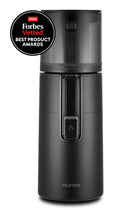
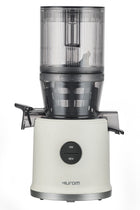
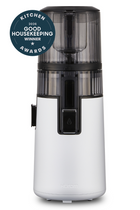
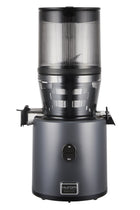
Esta es la opción que mucha gente pasa por alto. Un extractor lento de zumos, como los modelos Hurom, puede hacer leche de frutos secos a la vez que realiza varias otras tareas de cocina.
El proceso funciona de forma un poco diferente al de una batidora. En lugar de mezclar todo y requerir un filtrado separado, un extractor lento de zumos separa el líquido y la pulpa durante la extracción.
Esto significa que obtendrás leche de frutos secos suave con menos esfuerzo manual de colado.
Otra ventaja es la consistencia de la textura. Debido a que los extractores lentos de zumos separan el líquido y la pulpa durante la extracción, la leche terminada tiende a ser más suave y uniforme de un lote a otro.
La versatilidad es donde un extractor lento de zumos empieza a destacarse.
Esto me resulta especialmente útil al cambiar entre diferentes recetas a lo largo de la semana. Un día puede ser leche de almendras. Al día siguiente, podría ser zumo de apio, leche de avena, o incluso recetas de frutas congeladas.
Y a diferencia de muchas máquinas dedicadas a hacer leche, no te limitas solo a la leche vegetal.
Consejo profesional: ¿Tienes curiosidad por el proceso? Mira a continuación cómo un exprimidor Hurom puede hacer leche de frutos secos casera suave fácilmente:
¿Qué método es el adecuado para ti?
No hay una respuesta universal; cada opción se adapta a un tipo de usuario diferente.
Una batidora puede ser la mejor opción si:
-
Haces leche de frutos secos ocasionalmente.
-
Ya tienes una batidora de alta calidad.
-
Estás probando leche vegetal casera por primera vez.
-
El presupuesto es tu máxima prioridad.
Aun así, espera más preparación, más limpieza y la necesidad de bolsas o filtros de leche de frutos secos separados.
Mientras tanto, un extractor de jugos lento puede ser la mejor opción si:
-
Haces leche de frutos secos regularmente.
-
También disfrutas del jugo fresco.
-
La versatilidad a largo plazo es importante para ti.
-
Quieres una textura más suave con menos filtración manual.
-
Prefieres un solo electrodoméstico que maneje múltiples recetas.
Aquí es donde muchas personas hacen una pausa antes de comprar una máquina dedicada a la leche de frutos secos.
Una máquina especializada en leche puede ser conveniente. Pero si también quieres un electrodoméstico versátil, un extractor de jugos lento puede proporcionar más valor con el tiempo.
Consejo profesional: Si la leche de frutos secos casera es solo una parte de tu rutina, ayuda pensar más allá de un electrodoméstico de un solo propósito. Modelos como el Hurom H400, H320 y H70 pueden preparar leche de frutos secos y también apoyar jugos frescos, sorbetes y otras recetas a base de plantas. Esa flexibilidad se vuelve más valiosa cuanto más frecuentemente uses la máquina.
¿Valen la pena las máquinas dedicadas a la leche de frutos secos?
Esta es la pregunta que la mayoría de los compradores eventualmente se hacen. Y la respuesta honesta depende menos de la máquina en sí y más de tus hábitos.
Para algunas personas, una máquina dedicada a la leche de frutos secos se convierte en uno de los electrodomésticos más utilizados en la cocina. Para otros, termina ocupando espacio en el armario.
La diferencia generalmente se reduce a la frecuencia.

Podrían valer la pena si:
-
Bebes leche de frutos secos casera varias veces por semana.
-
Quieres un proceso altamente automatizado.
-
Prefieres electrodomésticos dedicados para tareas específicas.
-
Valoras la conveniencia por encima de la versatilidad.
-
Te gusta tener programas preestablecidos y mínimo trabajo manual.
Si esa es tu situación, una máquina dedicada a la leche vegetal puede simplificar tu rutina.
Muchas máquinas más nuevas mezclan, filtran y a veces calientan ingredientes en un solo ciclo. Esa comodidad es una de las principales razones por las que la categoría sigue creciendo.
Puede que no valgan la pena si:
-
Solo haces leche de frutos secos ocasionalmente.
-
Ya tienes una licuadora potente.
-
Quieres un electrodoméstico que maneje múltiples recetas.
-
Tienes espacio limitado en la cocina.
-
Prefieres maximizar el valor de cada compra de electrodoméstico.
Aquí es donde muchos compradores empiezan a comparar las máquinas de leche de frutos secos con los exprimidores lentos.
Una máquina dedicada puede hacer un trabajo muy bien. Pero un extractor de jugos lento puede soportar varias rutinas diferentes sin requerir otro electrodoméstico en la encimera.
Así que la respuesta depende más de tus hábitos que de la máquina en sí.
Consejo profesional: El siguiente paso para comenzar con tu leche de frutos secos casera es comparar las opciones disponibles. No te pierdas nuestro análisis de las mejores máquinas de leche de frutos secos para conocer los modelos más populares, sus características y los tipos de usuarios para los que son más adecuadas.
¿Listo para hacer leche de frutos secos casera más fácil?
Una máquina de leche de frutos secos puede ser una gran adición a la cocina adecuada. Simplifica el proceso, reduce el trabajo manual y facilita la preparación de leche vegetal fresca en casa.
Aun así, no es la única opción.
Si haces leche de frutos secos cada pocos días y quieres un electrodoméstico dedicado, una máquina de leche de frutos secos puede encajar perfectamente en tu rutina. Pero si también disfrutas de jugos frescos, postres helados y otras recetas caseras, un exprimidor lento puede proporcionar mucha más flexibilidad desde una sola máquina.
Por eso vale la pena pensar en tus hábitos antes de tomar una decisión.
Si estás considerando un enfoque más versátil, echa un vistazo a la línea de productos de Hurom. Pueden ayudarte a preparar leche de frutos secos casera suave, al mismo tiempo que te permiten preparar muchas otras deliciosas recetas a base de plantas.
Preguntas Frecuentes
¿Qué es una máquina de leche de frutos secos?
Una máquina de leche de frutos secos es un electrodoméstico especializado diseñado para hacer leche vegetal casera a partir de ingredientes como almendras, anacardos, nueces, avena y coco. Algunos modelos también pueden preparar recetas a base de soja, por lo que a veces se clasifican junto con una máquina de leche de soja.
¿Cómo funciona una máquina de leche de frutos secos?
La mayoría de las máquinas de leche de frutos secos combinan agua e ingredientes en un solo recipiente, los mezclan y separan el líquido de los sólidos a través de un sistema de filtración incorporado.
Algunos modelos van un paso más allá con ajustes de calor y mezcla, lo que te permite preparar leche vegetal caliente en un solo ciclo.
¿Cuál es la diferencia entre una máquina de leche de frutos secos y una licuadora?
Una licuadora requiere una filtración adicional utilizando bolsas de leche de frutos secos o una gasa. Mientras tanto, una máquina de leche de frutos secos automatiza gran parte de ese proceso.
Aunque las licuadoras son generalmente más versátiles, las máquinas dedicadas a la leche casera se centran en simplificar la producción de leche vegetal. Algunas personas también experimentan con herramientas como licuadoras de inmersión o procesadores de alimentos, pero esos métodos suelen implicar más preparación y limpieza manual.
¿Es la leche de frutos secos casera más saludable que las versiones compradas en la tienda?
Eso depende. La leche de frutos secos casera te da control total sobre lo que entra en cada lote y evita muchos de los estabilizadores, emulsionantes y aceites utilizados en algunos productos comerciales. Por otro lado, muchas opciones compradas en tiendas están fortificadas con nutrientes como la vitamina D y el calcio.
La mejor opción puede depender de tus necesidades dietéticas, pero evitar los aditivos artificiales siempre es la decisión más inteligente.
¿Qué puedo hacer con la pulpa de frutos secos sobrante?
La pulpa de frutos secos se puede reutilizar en batidos, productos horneados, granola, galletas saladas o bocadillos energéticos. Incluso he visto a personas haciendo galletas de pulpa de almendra y recetas de batidos.
Reutilizar la pulpa es una forma fácil de reducir el desperdicio de alimentos y sacar más provecho de cada lote de leche de frutos secos casera.
¿Puedo hacer leche de avena en una máquina de leche de frutos secos?
Sí. La mayoría de las máquinas modernas de leche de frutos secos pueden preparar leche de avena y otras leches vegetales. Las opciones disponibles varían según el modelo y sus configuraciones.
¿Puede un extractor de jugos lento hacer leche de frutos secos?
Sí. Los extractores de jugos lentos Hurom pueden producir leche de frutos secos suave mientras separan la pulpa durante la extracción. Esto reduce la necesidad de un colado manual y permite que la misma máquina se use para jugos frescos y otras recetas.
¿Necesito remojar los frutos secos antes de hacer leche de frutos secos?
En muchos casos, sí. Remojar almendras, anacardos y otros frutos secos puede mejorar la textura y facilitar el procesamiento. Algunas máquinas ofrecen programas sin remojo, pero el remojo tiende a producir resultados más suaves.
¿Cuál es la mejor máquina para hacer leche de frutos secos?
La mejor opción depende de tu rutina. Algunas personas prefieren máquinas dedicadas a la leche de frutos secos, mientras que otras prefieren un electrodoméstico más versátil que pueda preparar leche de frutos secos, jugos frescos, postres helados y otras recetas.
La elección correcta se reduce a la frecuencia con la que la usarás y qué más quieres que haga la máquina.
¿Valen la pena las máquinas de leche de frutos secos?
Pueden valer la pena si haces leche de frutos secos casera regularmente y valoras la comodidad. Si solo preparas leche vegetal ocasionalmente, un extractor de jugos lento puede proporcionar un mejor valor general y flexibilidad.