


Homemade Oat Milk: Real Benefits and How to Make It
octubre 07, 2025
Homemade oat milk is becoming one of the most popular plant-based drinks, and it's no coincidence. It tastes good, has a creamy texture, is easy to prepare, and doesn't require rare ingredients. Additionally, it's an ideal option if you're avoiding dairy, looking for something more natural, or simply want to reduce your consumption of processed products.
Next, I'll tell you why it's worth adding it to your daily routine, how to prepare it in different ways, and what details make the difference. Shall we begin?
¿Por qué la leche de avena es tan popular?

In a short time, oat milk went from being a novelty to becoming a favorite in coffee shops, home kitchens, and health food stores.
Hay many reasons for this boom, from its neutral taste to its creamy texture that works well in coffee as well as in sweet or savory recipes.
Furthermore, it is an accessible plant-based drink: oat flakes are economical, easy to find, and do not require long soaking processes like other ingredients.
But it's not all about trends. There are real differences between oat milk and other alternatives, both nutritionally and practically:
Comparación con la leche de vaca
Compared to cow's milk, oat drink has some clear advantages. For starters, it contains no cholesterol and has less saturated fat, which makes it more heart-health friendly.
It is also easier to digest for those with lactose intolerance, and as it is not an animal product, it is a common choice within vegan diets.
Now, from a nutritional point of view, not everything is superior.
A study published in Food Chemistry noted that oat milk is the closest to cow's milk in terms of taste and texture. However, it has a lower amount of protein and some essential amino acids such as lysine are limiting in this case.
So, is it better or worse?
It depends on what you're looking for. If you're interested in reducing saturated fats or avoiding dairy, oat milk is an excellent choice. But if your focus is on protein, you might want to supplement with other foods in your diet.
Diferencias entre leche de avena casera y comercial
Commercial versions of oat milk often come with added oils, stabilizers, sugars, and artificial flavorings. Some brands also include phosphates or additives to improve texture and prevent separation, which may not be ideal if you're looking for a more natural option.
At home, on the other hand, you decide.
You can make a basic recipe with just water and oats, or enrich it with spices, dried fruits, or natural sweeteners.
Another important point is the taste: being fresh and without preservatives, homemade oat milk has a cleaner taste and a lighter texture. It also reduces the risk of artificial flavors or that aftertaste that supermarket versions sometimes have.
Por qué elegir leche de avena casera frente a otras opciones vegetales
Among all plant-based milks, oat milk stands out for how balanced it is. It doesn't have the strong taste of soy, nor the very low calorie content of almond milk which often doesn't satiate. In fact, a comparative review highlighted it for offering a good combination of taste, texture, and functional benefits.
Sure, other options have their advantages.
Soy milk, for example, provides more protein. But its taste is not to everyone's liking. Meanwhile, almond milk is light but with a different nutritional contribution, and its production has a high environmental impact.
I prefer homemade oat milk because I find that it is more versatile and consistent, both in sweet and savory recipes. In addition, making it at home allows me to avoid plastic containers and reduce food waste.
Leche de avena casera: Beneficios que vale la pena conocer
Making your own oat milk at home is not only easy, it also has real advantages. From nutrition to economics, it's one of those decisions that make a difference day-to-day.
Here are the most important benefits:
Alto contenido en fibra y betaglucanos
One of the key contributions of oats is their soluble fiber, especially beta-glucans. These compounds help reduce LDL cholesterol and total cholesterol, according to the aforementioned study published in Food Chemistry.
Beta-glucans also generate a lasting feeling of satiety, ideal if you're looking to eat better without feeling hungry. It works very well for me in the mornings: a glass of oat milk with fruit keeps me full until lunch.
And there's more.
According to a research published in Nature, oat beta-glucan also reduces glucose and insulin response after meals. That is, it not only nourishes: it also supports metabolic balance.
Opción ideal para personas con intolerancia a la lactosa
For those who are lactose intolerant, finding a reliable alternative can be tricky. Homemade oat milk is a practical solution: it contains no lactose, no animal proteins, and avoids the risk of hidden ingredients.
By preparing the milk yourself, you know exactly what it contains. It's an extra reassurance, especially if you have a sensitive stomach or prefer to avoid processed products.
Aporte de energía y sensación de saciedad
Unlike other lighter plant-based drinks, oat milk provides real energy thanks to its complex carbohydrates. These are absorbed more slowly, helping to maintain stable energy levels for longer.
In my case, I usually use it as a base for smoothies or quick breakfasts.
It helps me start the day without feeling heavy, but satisfied. And if you're also looking for something to keep you active without relying on coffee or sugar, this drink can make a difference.
Ahorro económico y reducción de residuos
One of the things I value most about making oat milk at home is the savings. With one cup of oat flakes and water, you can prepare about a liter of plant-based drink. If you compare that to the cost of a liter at the supermarket, the difference is clear.
Additionally, preparing it yourself reduces the use of plastic containers and unnecessary packaging. It's a simple way to generate less waste without complicating your life.
Aporta antioxidantes naturales con efectos antiinflamatorios
According to a study in Spain, oats contain compounds such as avenanthramides and phenolic acids, known for their antioxidant and anti-inflammatory action. When you prepare the milk correctly, many of these compounds are preserved.
It's not about promising miracles, but about adding nutrients that support important bodily processes. The best part: you don't need supplements or special formulas. Just water, oats, and a few minutes of your time.
Cómo hacer leche de avena casera: 3 métodos
One of the advantages of this plant-based drink is that you can prepare it at home without too much hassle. Depending on the equipment you have and the quantity you make, there are different ways to achieve good results. But not all offer the same texture or the same ease.
Here I share three methods I tried, with their clear differences.
Método tradicional con licuadora
This is the most common method for preparing homemade oat milk.
It consists of soaking the oat flakes for 15 to 30 minutes, and then blending them with cold water in a blender or high-speed blender. Finally, you must strain the liquid with a very fine strainer or a cloth bag.
This method is an option if you are starting to prepare oat milk, or if you will only make it occasionally. But if you plan to add it to your daily routine, this method can become cumbersome:
-
Straining takes time and leaves a lot of residue.
-
If you over-blend, the milk becomes slimy.
-
And then you have to clean everything: blender, strainer, cloths, utensils...
In summary, the method works but requires more steps and care if you are looking for milk that has good taste and texture.
Uso de máquinas específicas para leches vegetales (milk makers)
These machines automate the process. Some soak, cook and filter with just the push of a button. You add the oats (soaked or not, depending on the model), fill with water and choose the program. A few minutes later you have a filtered milk, more or less creamy.
The problem is that you don't always get a pleasant texture. Some machines cook the mixture, which changes the flavor and can eliminate heat-sensitive nutrients. They can also leave residue at the bottom or an unstable texture.
In addition:
-
They take up a lot of space.
-
They have hard-to-clean parts.
-
And if something breaks, it's not easy to repair.
They are useful if you prepare several plant-based drinks a week and want to automate everything. But for many, they fall short between practicality and result.
Método con extractor lento Hurom
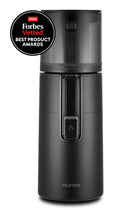
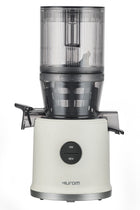
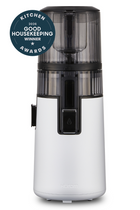
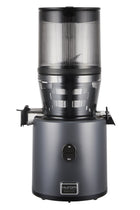
If you have a Hurom extractor, you can make homemade oat milk with less effort and better results. I discovered this when I started working at Hurom, over five years ago, and since then I haven't gone back to the traditional method.
You just need to soak the oat flakes for 15 to 30 minutes. If you use ground oats, you can even reduce that time to 5–10 minutes or eliminate soaking altogether. It's always key to rinse well before and after soaking to avoid strong flavors.
After soaking, pass the oats along with the water through the extractor. It processes them with its slow pressing system, separating the liquid without generating heat or oxidation. What you get is a smooth milk, without mucilage, without lumps and without the need to strain.
The difference is noticeable in the texture:
-
It's not gritty or too thick.
-
There's no need to strain it.
-
And it cleans in less than two minutes, with no complicated filters or difficult parts.
Besides, the Easy Clean line models (like the H400 or the H70) make the entire process (from preparation to cleaning the equipment) easier. If you make oat milk regularly, this method not only simplifies your life: it also improves the final result.
Pro tip: Hurom juicers are not only for oat milk. You can also prepare other plant-based milks, fresh juices, sorbets, nut butters, soup bases and more. All without changing equipment.
Consejos clave para preparar una leche de avena perfecta
After trying several homemade plant milk recipes, I realized that small adjustments make all the difference. Oat milk can come out creamy, light, and tasty... or thick, viscous, and with a strange flavor.
These tips will help you avoid the latter:
Variaciones con sabor
One of the advantages of preparing your own oat milk is that you can adjust it to your taste effortlessly. Some ideas I usually use:
-
Cinnamon powder or stick: Adds aroma and warmth. Ideal for hot beverages.
-
Vanilla extract: Just a few drops completely change the flavor profile.
-
Pitted dates: One or two per liter are enough to sweeten naturally.
-
Cocoa powder: If you like chocolate, mixing a little with oats and water creates a "choco-oat" type drink.
-
Sirope de agave o miel de maple: Para quienes prefieren un dulzor más suave o un toque gourmet.
Lo ideal es añadir estos ingredientes después de extraer la leche, mezclando de nuevo por unos segundos.
Cómo conservar correctamente leche de avena en el refrigerador
La leche de avena casera se conserva entre 3 y 5 días en refrigeración. Para alargar su frescura:
-
Guárdala en un envase de vidrio hermético.
-
No la dejes a temperatura ambiente más de una hora.
-
Si ves que cambia de olor o sabor, mejor desecharla y preparar una nueva tanda.
Pro tip: Al preparar leche de avena en casa, anota la fecha de preparación en el frasco. Así evitas dudas más adelante.
Cómo evitar una textura viscosa
Ese efecto “baboso” o gomoso viene del exceso de mucílago que liberan las hojuelas de avena cuando se procesan en exceso. Para evitarlo:
-
No licúes por más de 30 segundos.
-
Usa agua bien fría.
-
No remojes por demasiado tiempo (15 a 30 minutos es suficiente).
Si aún así te queda viscosa, colarla con una bolsa de tela fina puede ayudar.
Pro tip: Al usar un extractor Hurom, este problema prácticamente desaparece por el tipo de prensado lento que se aplica.
Cómo prevenir el sabor amargo o “a avena cruda”
Cuando las hojuelas de avena se remojan demasiado o se licúan con agua caliente, pueden soltar un sabor fuerte, como a cereal mal enjuagado. Para prevenirlo:
-
Enjuaga bien las hojuelas antes de remojar.
-
Usa agua limpia y fría, tanto para el remojo como para la mezcla.
-
No la dejes reposar muchas horas una vez hecha.
Otra opción es usar avena molida en lugar de hojuelas grandes: se extrae más rápido y sin tanto sabor residual.
Qué hacer para minimizar la separación del líquido
La separación es normal: la avena contiene partículas que tienden a asentarse. Pero hay formas de minimizarlo:
-
Usa menos agua si quieres una bebida más estable.
-
Vuelve a agitar antes de servir: con solo unos segundos, todo se reincorpora.
Usos prácticos de la leche de avena en la cocina
Una de las razones por las que uso la leche de avena casera con frecuencia es su versatilidad. Se adapta bien a recetas dulces, saladas y bebidas, sin robar protagonismo ni modificar demasiado el sabor.
Aquí van algunas ideas prácticas para incorporarla en tu día a día:
-
En café, té o matcha: Su textura cremosa y sabor suave la hacen ideal para reemplazar la leche de vaca en bebidas calientes. No corta el café ni se separa al agregarla caliente.
-
En batidos, jugos y smoothies: Aporta cuerpo sin saturar el sabor. Mezcla bien con frutas, semillas, cacao, proteína vegetal o lo que uses en tus licuados.
-
Como ingrediente en recetas de repostería: Funciona muy bien en bizcochos, muffins, pancakes o galletas veganas. Puedes reemplazar la leche común sin necesidad de ajustar la receta base.
-
En cremas, sopas y salsas: Se puede usar como base líquida para darle suavidad a preparaciones saladas, como una crema de calabaza o una bechamel vegana sin complicaciones.

Empieza a Preparar Tu Leche de Avena en Casa Hoy
Preparar leche de avena casera no es solo una alternativa saludable. También es una forma de ganar control sobre lo que consumes, reducir residuos y ahorrar sin sacrificar sabor ni textura.
Una vez que incorporas la leche de avena casera a tu rutina, difícilmente volverás a las versiones de supermercado. No hay comparación en frescura, ni en textura, ni en sabor.
Si nunca la has preparado, este es un buen momento para probar. Solo necesitas agua, hojuelas de avena y una herramienta confiable para extraer lo mejor de ese ingrediente tan simple. Hurom lo hace fácil. Y el cambio se nota desde el primer vaso.
Preguntas Frecuentes
¿Cómo puedo hacer mi propia leche de avena?
Hay varias formas. La más sencilla es licuar hojuelas de avena remojadas con agua y colar. También puedes usar un extractor lento como Hurom para obtener mejor textura sin necesidad de colar.
¿Cuánta agua se necesita para hacer 1 litro de leche de avena?
Una proporción común es 1 parte de avena por 3 a 4 partes de agua. Para un litro, basta con 1 taza de hojuelas y 3 o 4 tazas de agua, según qué tan cremosa la quieras.
¿Cuánto tiempo se conserva la leche de avena casera en el refrigerador?
Entre 3 y 5 días, si se guarda en un envase de vidrio hermético y siempre refrigerada. Es mejor prepararla en cantidades que vayas a consumir pronto.
¿La leche de avena casera es más saludable que la comercial?
Sí, sobre todo porque puedes evitar conservantes, estabilizantes y azúcares añadidos. También es más fresca y no tiene aceites ni aditivos que afectan la textura o el perfil nutricional.
¿Qué beneficios aporta la leche de avena al cuerpo?
Aporta betaglucanos (fibra soluble), genera saciedad, ayuda a regular el colesterol y es apta para personas con intolerancia a la lactosa. Además, contiene compuestos antioxidantes con efecto antiinflamatorio.
¿Qué pasa si tomo leche de avena todos los días?
En general, puede formar parte de una alimentación equilibrada. Aporta energía sostenida, ayuda a mantener niveles de glucosa estables y no tiene los efectos secundarios de los lácteos en personas intolerantes. Como siempre, lo ideal es variar tu dieta y escuchar cómo responde tu cuerpo.
¿Por qué a veces se separa o se corta la leche de avena?
La separación es natural, ya que no contiene emulsionantes. Basta con agitar antes de servir. Si se corta, puede deberse a fermentación (por estar fuera del refrigerador o por varios días). En ese caso, es mejor descartarla.